
Residential Proxy Providers 2026: Bright Data, Oxylabs, or Decodo?
Key takeaways
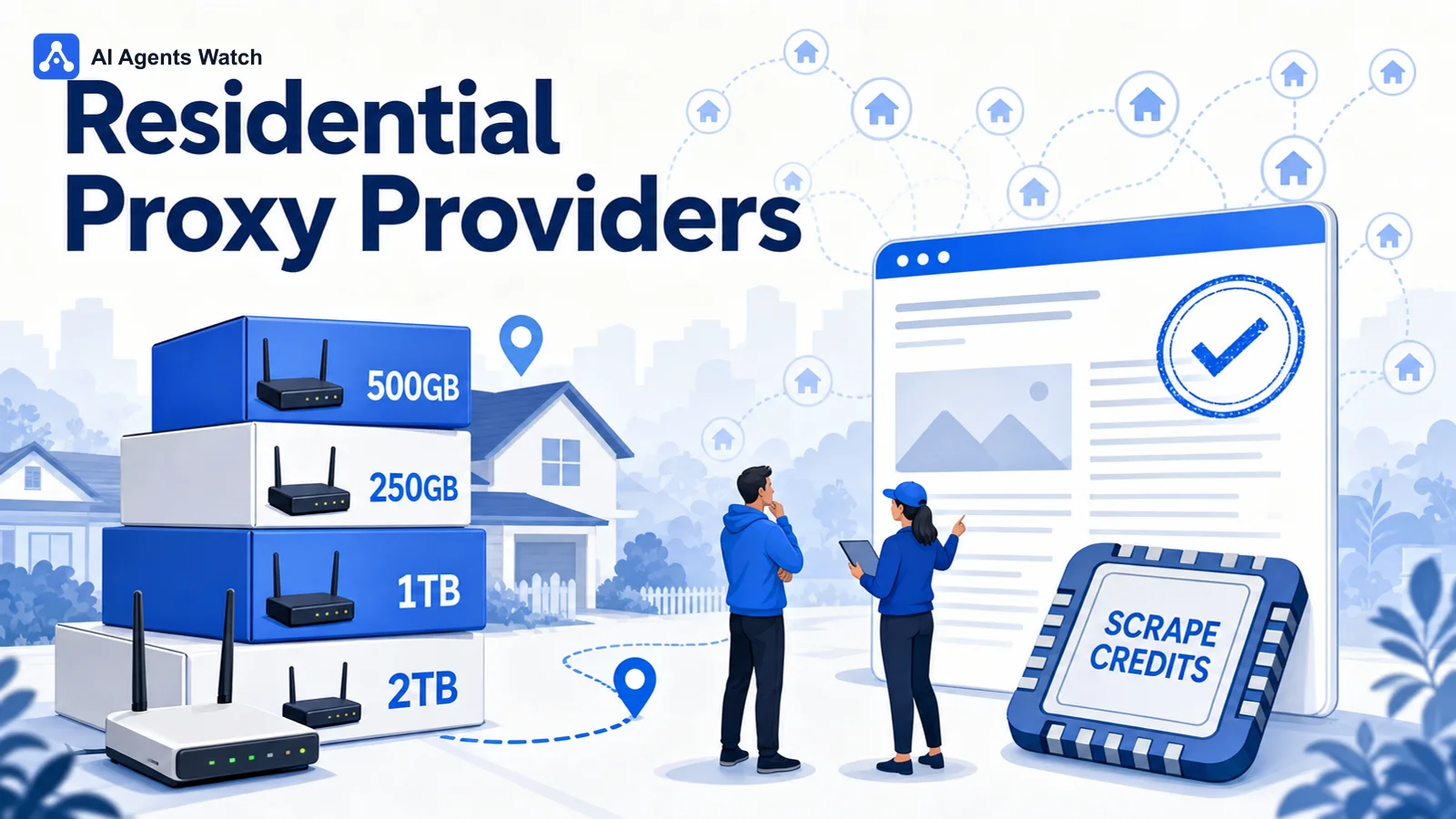
- Residential proxies are ISP-looking IPs billed in gigabytes. A scrape API bills HTML. Do not shop them as one product.
- Oxylabs Starter is $30 for 5 GB ($6/GB) as of October 2026. Decodo’s small pack is 3 GB at $3.75/GB ($11.25/month plus VAT).
- Bright Data residential PAYG lists $8/GB on the proxy-network page. A 50% coupon on that page is a promo, not the list.
- Already on Bright Data for Unlocker plus scraper plus proxies? Switch vs stay on that stack is Bright Data alternatives—not this GB shortlist.
A residential proxy sends the request out through a home ISP IP. You buy that path in gigabytes. A scrape API buys the HTML. Oxylabs Starter is $30 for 5 GB as of October 2026. ZenRows Free is 5,000 credits/month. The same Google URL can sit on both invoices. Shop the GB card when you will run the fleet. Shop the scrape API when you only needed the page.
| Job | I’d shortlist | Wrong fit |
|---|---|---|
| Self-serve rotating residential, small GB test | Oxylabs Starter ($30 / 5 GB) or Decodo (3 GB at $3.75/GB) | Paying ScraperAPI’s 25-credit Google line to “be a proxy” |
| Enterprise residential on a KYC platform | Bright Data (PAYG list $8/GB) | Treating a 50% proxy coupon as the forever list |
| Sticky ISP / one IP that does not rotate | Bright Data or Oxylabs ISP SKUs (separate from rotating GB) | Mixing per-IP ISP cards with rotating $/GB |
| HTML through anti-bot, no proxy fleet to run | ZenRows or ScraperAPI | Buying 5 GB to fetch one URL |
Already on Bright Data’s whole stack and asking whether to switch? That job is Bright Data alternatives. Search-results JSON is SERP API pricing.
What residential GB actually buys
You point HTTP or SOCKS at a gateway. The vendor rotates—or holds—an IP that looks like a household broadband line. The bill is bandwidth. A fat JSON payload and a 4K image both eat GB. Failed retries eat GB too unless the vendor says otherwise.
Rotating means a new IP per request, or after a sticky window you set. Sticky, static residential, and ISP products pin one IP. Those are often billed per IP, not only per GB. Same company can sell both. The cards are not interchangeable.
Skip a residential pool when the ticket was “return the HTML.” That is a scrape API.
Self-serve rotating GB — Oxylabs
You wanted five gigabytes on a public pricing page. Not a sales quote. Not a thinner HTML API. Oxylabs Starter is 5 GB for $30 ($6/GB). Basic is 20 GB for $100. Advanced 125 GB / $500. Corporate 1 TB / $2,500 ($2.50/GB). VAT may apply. As of October 2026 on Oxylabs residential pricing.
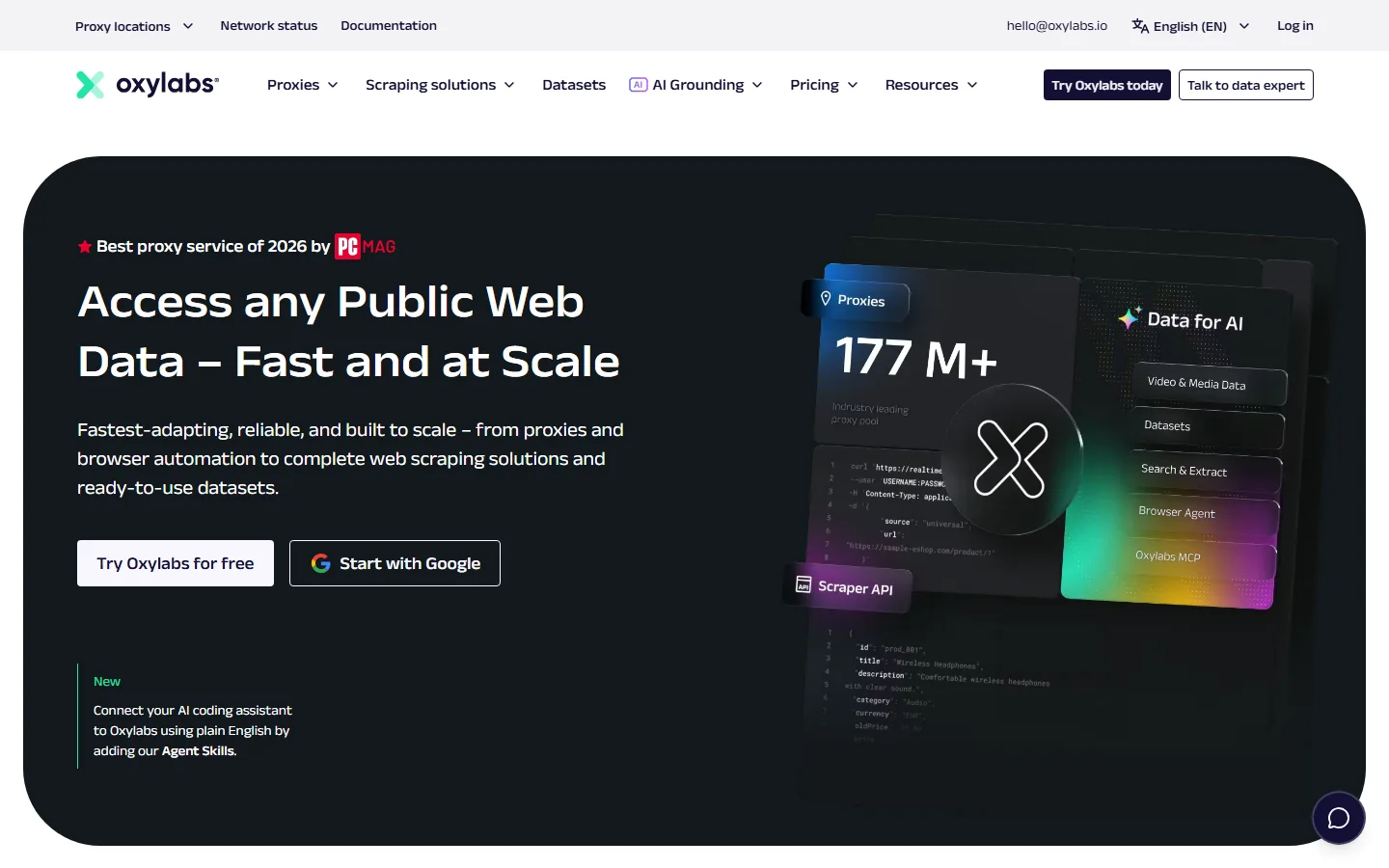
Self-serve refunds: request within 3 days of the first purchase, and you used no more than 20% of traffic on regular plans (10% on enterprise). Some targets are blocked—banking, streaming, parts of Google. Read their list before you buy.
Skip Oxylabs residential when the unit is a page. That bill is ZenRows pricing. More product mix sits on the Oxylabs overview.
A 3 GB pack without a platform floor — Decodo
Three gigabytes. Not a $499 monthly floor. Decodo (formerly Smartproxy) lists 3 GB at $3.75/GB ($11.25/month plus VAT), then 10 GB at $3.50, 25 GB at $3.25, 50 GB at $3.00, 100 GB at $2.75. Pay as you go is $4/GB. As of October 2026 on Decodo residential pricing.
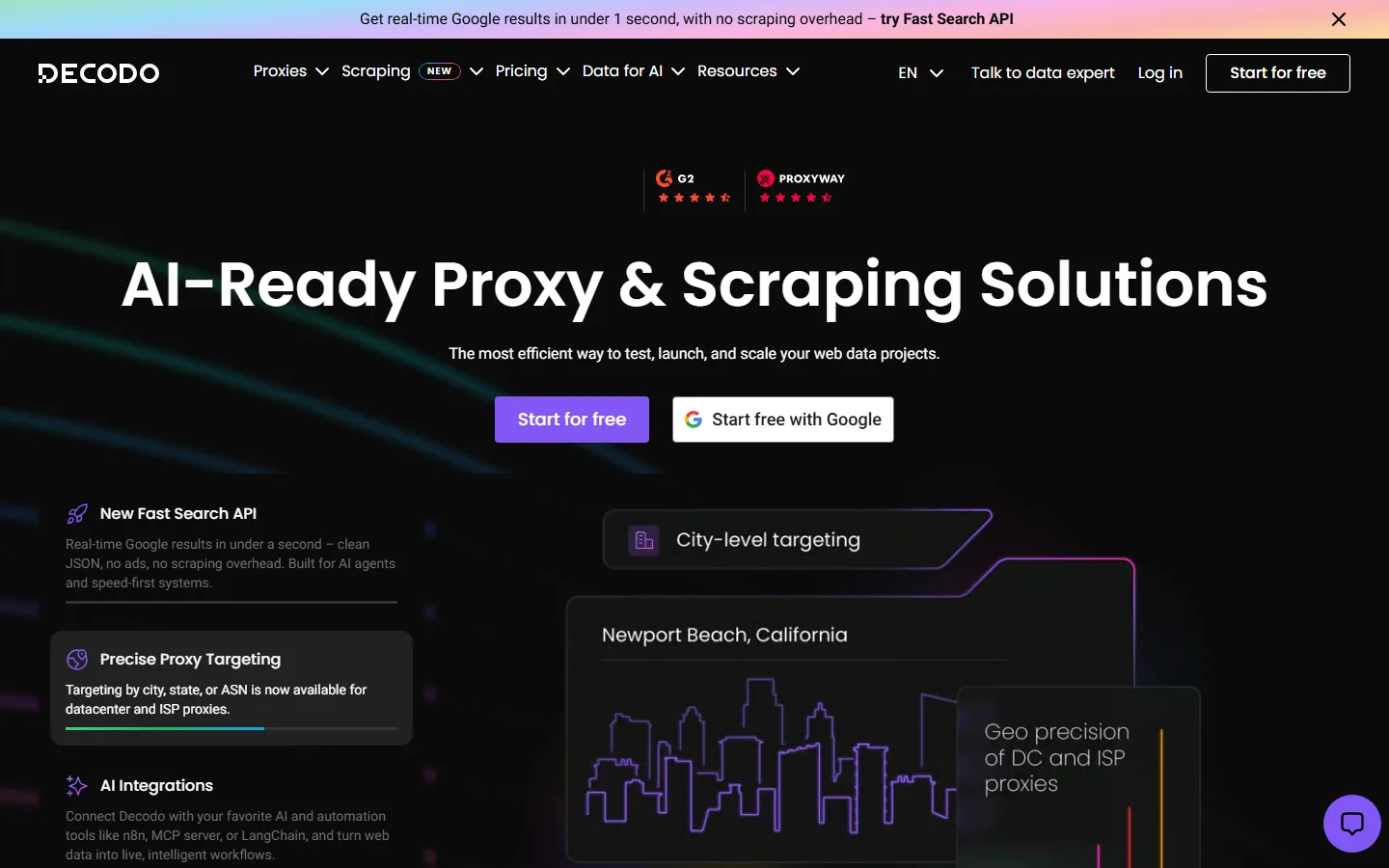
New accounts can take a 3-day trial with 100 MB. The chosen plan starts when the trial ends unless you cancel. The 14-day money-back path does not apply to that trial.
Skip Decodo because the homepage also says “from $2/GB.” That rate is a large-volume line, not the 3 GB card. Skip it when you need Bright Data’s KYC platform or Oxylabs’ 1 TB Corporate card. Overview: Decodo.
Residential that has to live on Bright Data
Unlocker was already on the invoice. Then someone asked for the residential network on the same login. Bright Data’s proxy-network page lists residential PAYG at $8/GB (shown with a 50% coupon as $4/GB as of October 2026). Monthly examples: $499 for 141 GB (list $7/GB), $999 for 332 GB, $1,999 for 798 GB. First-deposit match up to $500 is a signup promo, not the GB list. Numbers: Bright Data proxy-network pricing.
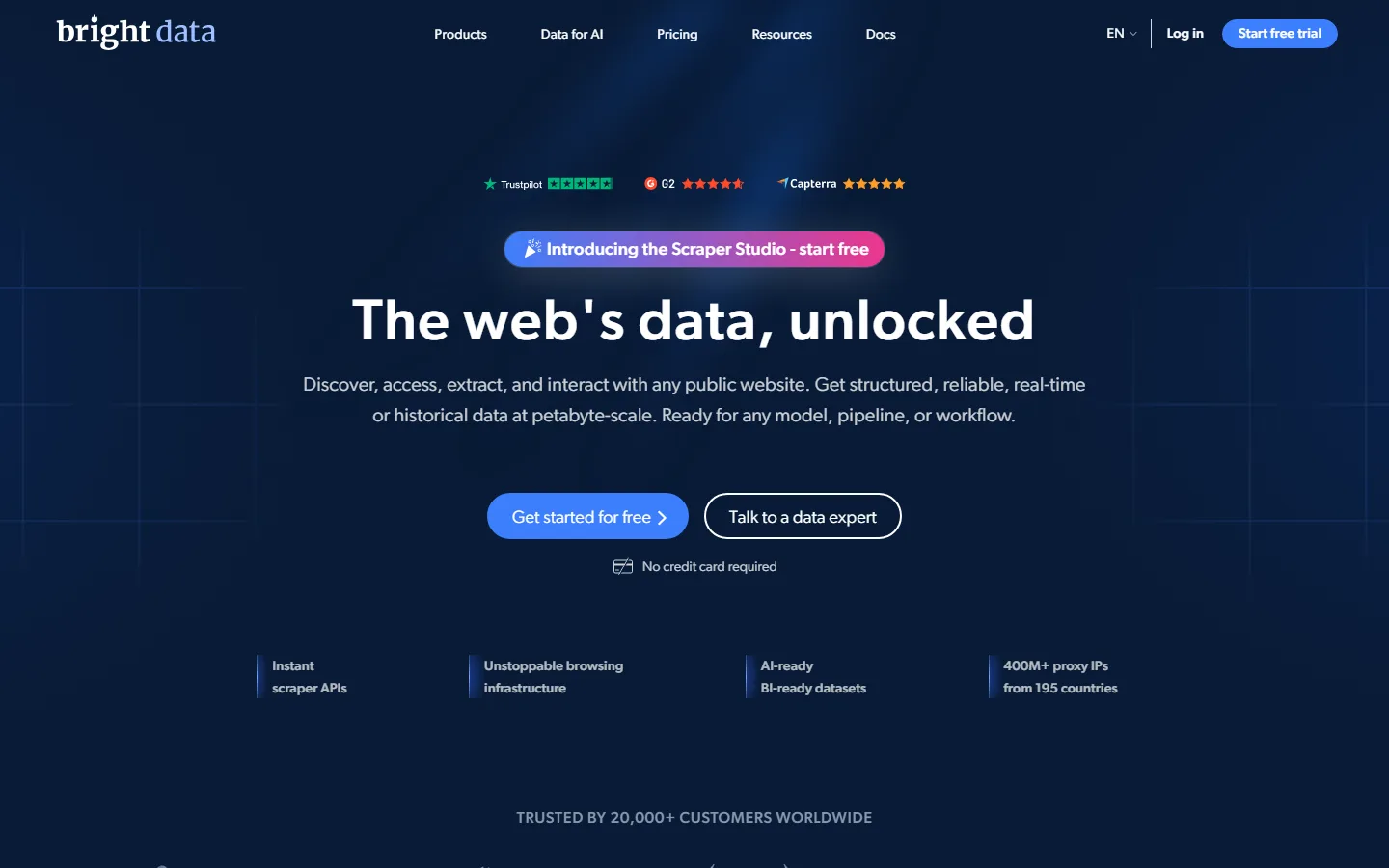
Residential and mobile use go through KYC. Web Unlocker is a different product and does not replace a GB pool.
Don’t pick Bright Data residential to dodge a scrape-API bill. Don’t treat the coupon price as the list. Switch vs stay on the platform is Bright Data alternatives. Overview: Bright Data.
ZenRows — credits for a page, not a gigabyte
The ticket said get the page. Nobody asked you to rotate household IPs. ZenRows Free is 5,000 credits/month, no card. Build is about $16/month for 45,000. JS rendering chews that pool. A static pull does not.
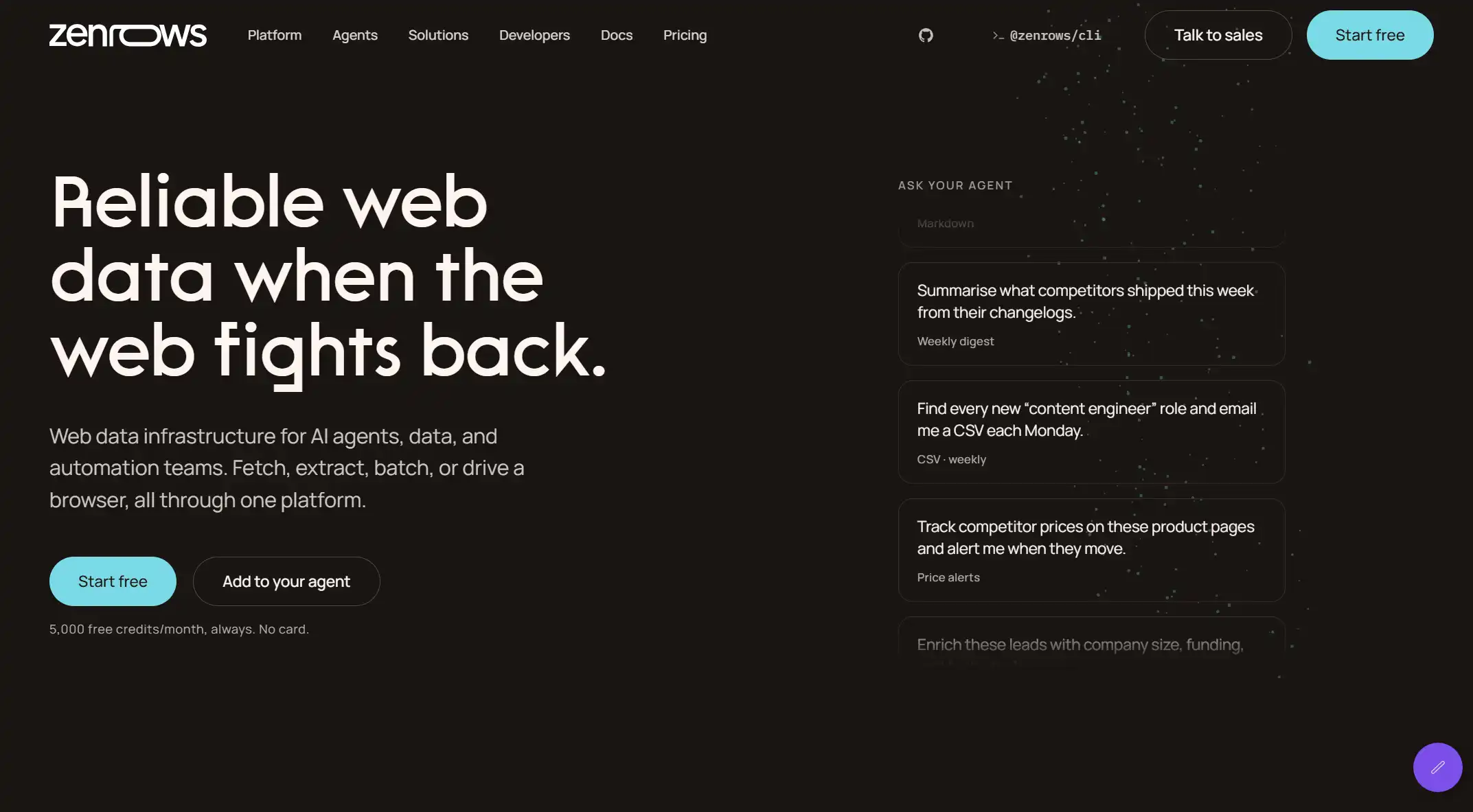
As of October 2026 this is a scrape/web-data API. Fetch, Extract, and Browser Sessions share one credit pool. There is no residential GB card on the pricing page.
Don’t buy 5 GB of rotating residential to replace a successful HTML fetch. Price the pool on ZenRows pricing. What Fetch vs Extract share is on the ZenRows overview.
ScraperAPI — Google billed as a hard page
Someone needed the Google HTML, not a rotating home IP. ScraperAPI lists that URL at 25 credits. Hobby is from about $49/month for 100,000 credits, after a 7-day trial. Hit Amazon or LinkedIn and the same pack vanishes faster. That is domain difficulty, not a gigabyte of household IPs.
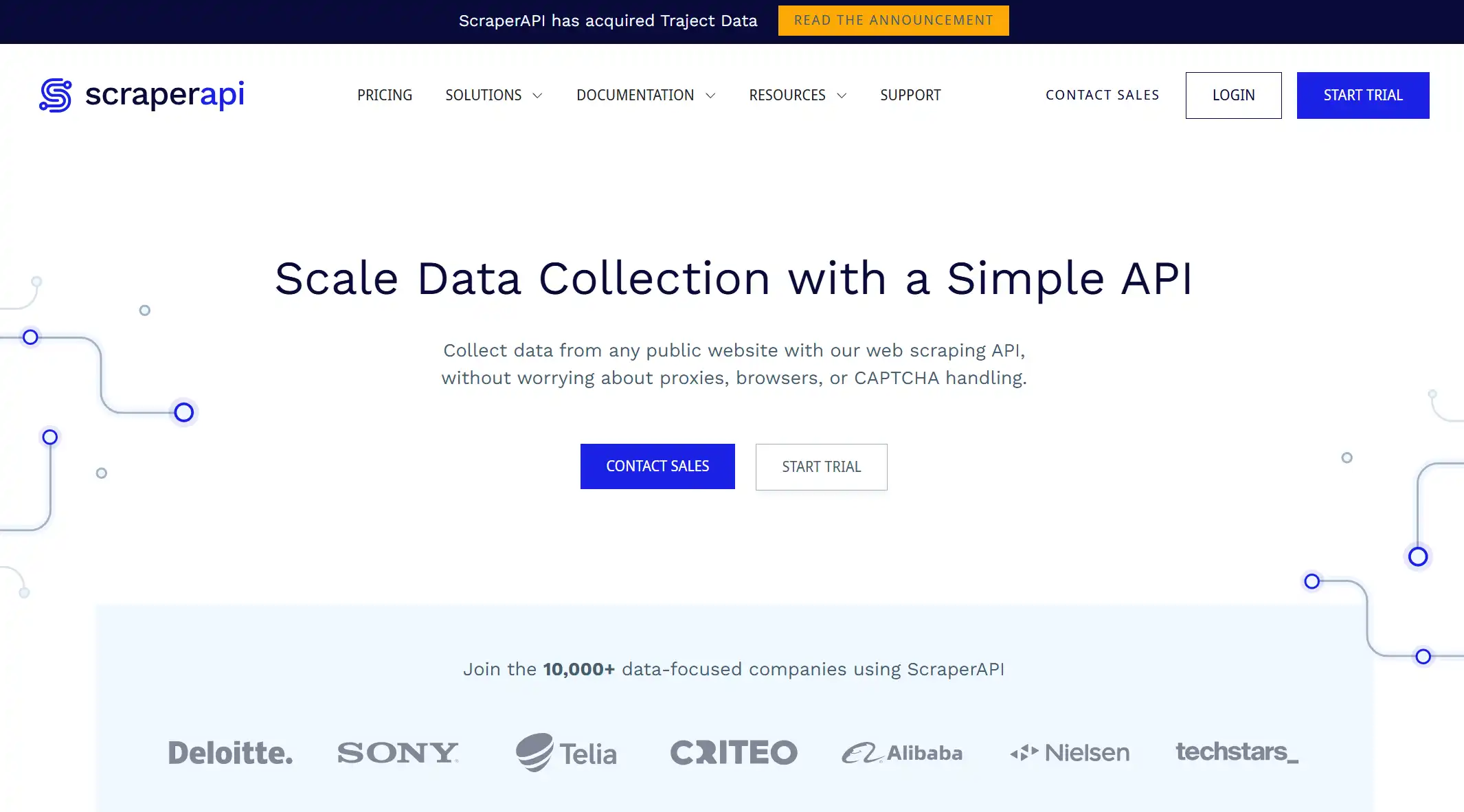
Unused credits do not roll on renew. Don’t buy ScraperAPI to stand in for a proxy fleet. Don’t buy Serper credits to stand in for a proxy pool. Forecast domain burn on ScraperAPI pricing. Threads and geotargeting sit on the ScraperAPI overview.
Pick rules
I’d pick Oxylabs when self-serve rotating residential GB is the product and Starter’s $30 / 5 GB is an acceptable test. I’d pick Decodo when a 3 GB pack or $4/GB PAYG is the size of the job—and you will cancel the trial before it converts. I’d pick Bright Data when residential has to live on that platform, KYC included.
I’d pick ZenRows when the unit is a page and a recurring Free credit pool is enough to prove the fetch. I’d pick ScraperAPI when domain-cost credits (Google at 25) match the sites you hit.
I’d skip every residential vendor when the unit is a page, not a gigabyte. I’d skip Bright Data’s $8/GB PAYG list if all you needed was Decodo’s $11.25 card—and skip Decodo if compliance and a large-pool platform story are the buy.
How I checked this
This page shortlists residential proxy providers billed in GB: Oxylabs, Decodo, and Bright Data, with scrape APIs (ZenRows, ScraperAPI) as the wrong product. I used public residential/proxy pricing pages as of October 2026. I pick by job first—rotating GB vs sticky ISP vs HTML API—then by pack size and checkout (self-serve vs KYC platform).
Products in this guide
- Oxylabs Self-serve residential GB—Starter $30 for 5 GB as of October 2026. Visit site
- Decodo Rotating residential packs (formerly Smartproxy)—3 GB at $3.75/GB, PAYG $4/GB. Visit site
- Bright Data Enterprise residential network—PAYG lists $8/GB; KYC on residential/mobile. Visit site
- ZenRows Scrape/web-data API neighbor—HTML credits, not a residential GB plan. Visit site
- ScraperAPI Managed scrape API neighbor—Google listed at 25 credits per page, not a GB pool. Visit site



FAQ
What are the best residential proxy providers?
Oxylabs when you want self-serve rotating residential GB (Starter $30 for 5 GB). Decodo (formerly Smartproxy) when a smaller pack or PAYG at $4/GB is enough. Bright Data when residential has to sit on that enterprise platform, including KYC. A scrape API is the wrong product for a proxy fleet.
Bright Data vs Oxylabs residential proxies?
Same job class—rotating residential billed in GB—but different checkout. Oxylabs publishes Starter through Corporate cards. Bright Data’s proxy-network page lists PAYG at $8/GB and monthly commitments from $499. Compare GB, KYC, and whether you also need Unlocker, not a single headline.
What is a rotating residential proxy?
A rotating residential proxy sends each request (or a short sticky window) out through a different home-ISP IP. You pay for bandwidth in GB. Sticky/ISP products that pin one IP are a different product.
Are residential proxies the same as a scraping API?
No. Proxies sell IP path and GB. Scrape APIs sell a successful page (credits or records). ZenRows and ScraperAPI are the HTML job. Serper is search JSON. None of those replace a residential pool.
Keep reading

Last updated